
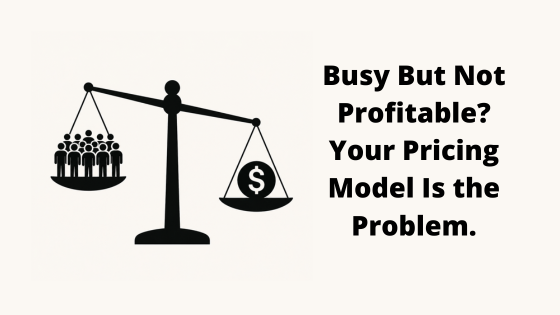
Markup vs Margin: The Pricing Mistake That’s Quietly Killing Your Profit.
Listen to the audio version of this blog post.
Watch a video summary of this post.
1. Introduction – The Hidden Pricing Problem
Most business owners I speak to are confident about their pricing.
They’ll say things like:
- “We just double our costs.”
- “We work on a 50% markup.”
- “That’s what everyone in our industry does.”
And on the surface, it sounds reasonable. It’s simple, it’s quick, and it feels like there’s logic behind it. But when I actually sit down with them and go through the numbers properly, a very different picture starts to emerge.
I remember working with a contractor who was convinced he was making good money. His logic was straightforward:
“If a job costs me £1,000, I charge £2,000. That gives me £1,000 profit.”
Simple. Clean. Easy to understand. But when we broke it down, that £1,000 “profit” wasn’t profit at all. Out of that had to come:
- Office costs
- Vehicles and fuel
- Insurance
- Admin time
- Quoting time (which no one ever charges for)
- Project management
- The jobs that overran or went wrong
By the time we accounted for everything, his actual profit was a fraction of what he thought it was. In some cases, he wasn’t making money at all.
I see this constantly.
A product-based business doubles the cost of goods and assumes they’re covered. But they’ve completely ignored:
- Marketing spend
- Returns and wastage
- Storage and logistics
- Payment fees
A service business prices based on day rates, thinking they’re profitable. But they haven’t factored in:
- Non-billable time
- Gaps between projects
- Client acquisition costs
They’re busy. They’re turning over revenue. But the money isn’t where it should be. The real issue here isn’t effort. Most of these businesses are working hard. Very hard. The issue is that their pricing is based on a shortcut, a rule of thumb, rather than a proper commercial model. And that shortcut hides two critical problems:
- It ignores the true cost of running the business
- It ignores what the market is actually willing to pay
This is where things get dangerous. Because you can be:
- Winning work
- Increasing turnover
- Keeping your pipeline full
…and still be underperforming financially. You feel busy, but not rewarded. The uncomfortable truth is this:
Pricing is one of the biggest drivers of profit in your business, and most people are guessing.
Not because they’re careless. But because no one has ever shown them a better way. This blog is about fixing that. We’re going to strip pricing back to basics and look at the difference between markup and margin, because understanding that difference is often the moment everything changes. Once you see it, you can’t unsee it.
2. What Is Markup? (And Why It’s So Popular)
Markup is the most common way I see small businesses set their prices. At its simplest, markup is just this:
Cost + a percentage = selling price
So if something costs you £100 to produce and you apply a 100% markup, you sell it for £200. That’s it. No complexity. No deeper thinking. Just a straight uplift on cost. And I understand why it’s so popular. It feels logical.
If it costs you £100 and you charge £200, you feel like you’ve made £100 profit. On paper, it looks clean and straightforward. There’s a sense of control, “as long as I cover my costs and add a bit on top, I’ll be fine.” This is exactly how most business owners I meet approach pricing, especially in the early stages.
I see it across almost every sector:
- Contractors will take materials and labour, then add a percentage
- Retail businesses will double their cost of goods
- Manufacturers will apply a standard markup across all products
- Service businesses will base pricing on a day rate plus a margin they’ve “always used”
And in many cases, this approach isn’t even questioned. It’s just:
“That’s how it’s done.”
Sometimes it’s learned behaviour. They’ve picked it up from a previous employer. Or a competitor. Or an industry norm that’s been passed down without anyone really challenging it. Other times, it’s simply about speed. When you’re quoting regularly, under pressure, trying to win work, markup gives you a quick answer. You don’t need to stop and think, you just apply the formula and move on.
And to be fair, markup does serve a purpose. It gives you:
- A consistent way to price
- A quick method for quoting
- A basic level of cost coverage
If all you’re trying to do is make sure you don’t sell at a loss on direct costs, it can work. But here’s the problem. Markup is entirely cost-focused.
It starts with: “What does this cost me?”
And then adds something on top. What it doesn’t ask is:
- What does it actually cost to run the business?
- What profit do I need to make?
- What is the market willing to pay?
- Where am I positioned, cheap, mid-range, or premium?
So what happens? You end up with pricing that feels structured… but is actually disconnected from reality. I’ve seen businesses:
- Using the same markup across completely different types of work
- Applying a standard percentage regardless of risk or complexity
- Competing on price without even realising it
All because the pricing model is too simple for the business they’re running. Here’s the key point:
- Markup is easy. That’s why people use it.
- But easy doesn’t mean accurate, and it definitely doesn’t mean profitable.
Markup gives you a number. But it doesn’t tell you if that number is right. And that’s where the real problem begins.
3. What Is Margin? (And Why It Actually Matters)
If markup is how most people price, margin is how you understand whether your pricing actually works. And this is where things start to shift. Margin looks at profit differently. Instead of starting with cost and adding on top, margin asks:
“What percentage of the selling price do I actually keep?”
So using the same example:
- You sell something for £200
- It costs you £100
- Your profit is £100
That gives you a 50% margin
Now at first glance, that might not seem like a big deal. But it’s a completely different way of thinking. Markup is built around cost. Margin is built around outcome. And that distinction matters more than most people realise. Because margin tells you the truth about your business. It answers questions like:
- How much profit are we actually generating from our revenue?
- Is this job/product worth doing?
- Are we building a sustainable business or just staying busy?
Markup can’t answer those questions. Margin can. Let me give you a practical example I see all the time.
A business owner tells me: “We work on a 50% markup.” They feel confident about it. It sounds solid. But when we convert that into margin, it’s not 50%. It’s 33%. So for every £1 of revenue, they’re only keeping 33p before overheads. Once you take off the real costs of running the business, that number drops quickly.
This is where the misunderstanding becomes dangerous. Because if you think you’re running at 50% but you’re actually running at 33%, every decision you make is based on the wrong assumption. You might:
- Take on work that isn’t actually profitable
- Price too low without realising it
- Struggle with cash flow despite strong sales
- Wonder why growth isn’t translating into profit
Margin forces clarity. It removes the illusion. And here’s why it matters commercially. Every serious financial measure in business is based on margin:
- Gross profit margin
- Operating margin
- EBITDA margin
When buyers look at your business, they’re not asking: “What’s your markup?”
They’re asking: “How much of your revenue turns into profit?”
Because that tells them:
- How efficient the business is
- How resilient it is
- How scalable it is
This is also where pricing links directly to value. A business with strong, consistent margins is:
- More predictable
- Less reliant on volume
- Less exposed to cost increases
- More attractive to buyers
Two businesses can generate the same revenue…But the one with better margins will:
- Generate more cash
- Have more control
- Be worth more
Here’s the shift I try to get business owners to make:
- Stop thinking in terms of “what do I add on?”
- Start thinking in terms of “what do I keep?”
Because at the end of the day, revenue is vanity. Margin is reality. And if you don’t understand your margins, you don’t really understand your business.
4. The Critical Difference – Why Markup Misleads
This is where most of the confusion sits. On the surface, markup and margin feel like they’re saying the same thing. They’re not. And that gap between the two is exactly where profit gets lost. The simplest way to understand it is this:
- Markup is based on cost
- Margin is based on selling price
That might sound like a small technical difference. In reality, it changes everything. Let’s go back to a simple example.
You buy or produce something for £100 and apply a 50% markup. So you sell it for £150. Most business owners will look at that and think:
“I’ve added 50%, so I must be making 50%.”
But you’re not. Your profit is £50 on a £150 sale. That’s a 33% margin.
Now stretch that out across your entire business. Every product, every job, every quote. If you’re consistently thinking you’re making more than you actually are, your whole pricing strategy is built on a false assumption.
Here’s another one I see all the time:
“We double our costs, so we’re making 100%.”
No.
If you double £100 to £200, your profit is £100 on a £200 sale. That’s a 50% margin. Not 100%.
So what? That’s the question most people ask. Why does this actually matter? It matters because it creates a false sense of security. You think your margins are stronger than they are. You think you’ve got more room than you actually do. You think your pricing is working… when it isn’t. And that leads to real commercial problems.
4.1. You underprice without realising it.
If you believe you’re making 50% when you’re actually making 33%, you’re far more likely to discount, negotiate, or “sharpen your pencil” to win work. Because you think you’ve got margin to give away. In reality, you don’t.
4.2. Your overheads quietly eat your profit.
That 33% margin has to cover:
- Admin
- Rent
- Sales and marketing
- Downtime
- Mistakes and rework
If your margin isn’t what you think it is, it gets consumed very quickly.
4.3. Growth makes the problem worse, not better.
This is the one that catches people out. You win more work. Revenue increases. The business looks like it’s growing. But because your margins are weaker than you believe, you’re scaling a flawed model. More turnover… but not more profit. Sometimes even less.
4.4. You compete in the wrong part of the market.
When your pricing is built on markup, you naturally drift towards competing on cost. Because your starting point is:
“What does it cost me?”
Not:
“What is this worth?”
So you end up in price-driven conversations, even if you don’t intend to. Here’s the key insight:
- Markup tells you how you got to a price.
- Margin tells you whether that price actually works.
And if you’re not clear on that distinction, you end up managing your business on assumptions rather than facts. I’ve had conversations with business owners where everything looks good:
- Strong pipeline
- Healthy turnover
- Plenty of activity
But when we convert their markup into real margin, the truth comes out. They’re working hard for far less than they should be. That’s why this matters. It’s not about technical definitions. It’s about understanding whether your pricing is:
- Sustainable
- Profitable
- Scalable
Because once you see the difference clearly, one thing becomes obvious:
- Markup might give you a price.
- But margin tells you the truth.
5. The Bigger Problem – What Markup Ignores
Even if you fully understand the difference between markup and margin, there’s a deeper issue. Markup doesn’t just mislead you. It misses entire parts of the business completely. Because markup is built on a simple premise:
“Take the direct cost and add something on top.”
The problem is… your business isn’t just direct costs. Not even close. When I sit down with business owners and go through their numbers properly, this is where the real gaps appear. Not in the calculation. But what’s missing from the calculations.
a. Overheads – The Costs No One Prices Properly
Most markup models only consider:
- Materials
- Labour (sometimes)
But they ignore everything else that keeps the business running. Things like:
- Office and premises
- Vehicles and fuel
- Insurance
- Software and systems
- Admin staff
- Management time
And one of the biggest hidden costs:
- Quoting time
You might spend hours pricing a job… and never win it. Where does that cost get recovered? It usually doesn’t.
So what happens? You win the job, deliver it, get paid… and think you’ve made money. But in reality, a chunk of your business cost has gone completely unaccounted for.
b. Profit Targets – There’s No Design to the Outcome
Markup doesn’t start with: “How much profit do I actually need to make?”
It just adds a percentage and hopes that’s enough. There’s no connection to:
- Your personal income goals
- Reinvestment into the business
- Building reserves
- Scaling the operation
So profit becomes something you discover at the end…Instead of something you design at the start.
c. Risk – The Reality That Jobs Rarely Go to Plan
No job ever goes perfectly. You get:
- Delays
- Cost increases
- Scope creep
- Mistakes and rework
Markup assumes everything goes exactly to plan. Margin needs to absorb the fact that it won’t. I’ve seen businesses price tightly using markup, win the job… and then lose their entire profit because something slipped. Not dramatically. Just enough.
And that’s the danger. When your pricing has no built-in tolerance for risk, even small issues wipe out your profit.
d. Market Pricing – The Biggest Blind Spot of All
This is the one most people don’t like hearing.
The market doesn’t care what it costs you.
Customers don’t buy based on your internal calculations. They buy based on:
- Perceived value
- Alternatives available
- Trust and credibility
- Urgency and importance
So you can end up in two equally dangerous positions:
5.1. You’re too cheap
Because your markup doesn’t reflect the value you deliver. You win the work… but leave money on the table every time.
5.2. You’re too expensive
Because your costs are high and you’ve just marked them up. You lose work… without understanding why.
In both cases, the problem is the same: Your pricing is disconnected from the market.
The Real Issue – Markup Is Inward-Facing
If you step back, you can see the pattern.
Markup looks inward:
- What does it cost me?
- What can I add on?
It never properly looks outward:
- What is this worth?
- What does the market expect?
- Where do I sit competitively?
And that’s why it breaks down as your business grows. Because the more complex your business becomes, the less a simple markup model can handle. Here’s the key point:
- Markup might help you cover some costs.
- But it doesn’t help you run a commercial business.
If you want:
- Consistent profit
- Control over your pricing
- A business that actually rewards the effort you’re putting in
You need to move beyond “cost plus” thinking. Because the biggest problem with markup isn’t what it gets wrong. It’s what it doesn’t even consider.
6. The “Double Your Costs” Trap
If there’s one pricing rule I hear more than any other, it’s this: “We just double our costs.” It’s everywhere. Contractors use it. Retailers use it. Manufacturers use it. Service businesses disguise it as a “standard rate.” And on the surface, it feels sensible.
If something costs £100 and you charge £200, you’ve got £100 left. That sounds like profit.
The problem is… It’s not a strategy. It’s a shortcut. And like most shortcuts in business, it works just enough of the time to be dangerous.
Why It Feels Like It Works
There are situations where doubling your costs does produce a decent outcome. If:
- Your overheads are relatively low
- Your jobs run smoothly
- Your pricing sits roughly in line with the market
…you can get away with it. And that’s exactly what happens. You win work. You generate revenue. There’s money coming in. So the assumption becomes: “This must be working.” But what’s really happening is this: It’s working by coincidence, not by design.
Why It Breaks Down
The moment you look closer, the cracks start to show.
6.1. Not All Businesses Have the Same Cost Structure
Two businesses can do the same job… with completely different overheads.
- One runs lean, minimal admin, low fixed costs
- The other has offices, staff, systems, and higher infrastructure
If both “double their costs,” they don’t end up in the same place. One makes money. The other struggles.
6.2. It Assumes Every Job Is the Same
Doubling your costs applies the same logic to:
- Simple jobs
- Complex jobs
- High-risk work
- Low-risk work
But not all work carries the same level of:
- Effort
- Risk
- Uncertainty
So why would it all carry the same pricing logic?
6.3. It Ignores What the Market Is Willing to Pay
This is the big one. You might double your costs and land at £2,000. But what if:
- The market would comfortably pay £3,000?
- Or only supports £1,800?
In both cases, you’re wrong.
- In the first, you’re underpricing and losing profit
- In the second, you’re overpriced and losing work
And you don’t even realise it, because you’re anchored to your costs, not the market.
6.4. It Creates a False Sense of Control
“Double your costs” feels structured. It feels like you’ve got a system. But in reality, you’re not controlling your pricing; you’re outsourcing it to a rule of thumb.
The Real Danger – It Caps Your Business
This is where it gets serious. If your pricing is tied directly to your costs, then: The only way to increase profit is to increase volume or reduce costs. So you end up:
- Chasing more work
- Working harder
- Trying to shave costs
Instead of doing the one thing that actually moves the needle: Improving your pricing. And that creates a ceiling. You can only push so far before:
- Capacity becomes an issue
- Quality drops
- Stress increases
All while profit stays under pressure.
A Practical Example
I worked with a business pricing jobs at roughly double cost. They were busy. Booked out. Plenty of demand. But cash flow was tight, and the owner couldn’t understand why. When we broke it down:
- Their overheads were higher than they realised
- Their margin was thinner than they thought
- And the market would have accepted a higher price
They weren’t losing work because of the price. They were losing profit because of how they were pricing.
The Key Insight
Doubling your costs doesn’t guarantee profit. It just guarantees a number. And if that number isn’t:
- Covering your real costs
- Delivering your required margin
- Aligned with the market
…then it’s not doing its job.
The Shift
Instead of asking: “What do I need to multiply my costs by?” You should be asking:
- What margin do I need?
- What is this worth to the customer?
- Where do I want to sit in the market?
Because once you start thinking like that, one thing becomes clear:
- Pricing isn’t about doubling your costs.
- It’s about designing your profit.
7. Pricing Should Be Market-Led, Not Cost-Led
This is the shift that changes everything. Most businesses price like this:
“What does it cost me… and what can I add on top?”
That’s cost-led pricing. And as we’ve seen, it feels logical, but it keeps you trapped. Market-led pricing flips that thinking on its head. It starts with a completely different question:
“What is this worth to the customer?”
Not in theory. In reality. Because here’s the uncomfortable truth:
- The market doesn’t reward you for your costs.
- It rewards you for the value you create.
What Does “Market-Led” Actually Mean?
It means your price is influenced by:
- The problem you’re solving
- The importance of that problem
- The alternatives available
- The risk of getting it wrong
- The outcome the customer expects
Let me give you a simple example. Two contractors quoted for the same job.
- Contractor A prices based on cost + markup
- Contractor B prices based on certainty, reliability, and outcome
Contractor B might be 20 – 30% more expensive.
But if they:
- Show a clear scope
- Remove uncertainty
- Demonstrate experience
- Reduce risk
They often win the work anyway. Because the client isn’t buying hours or materials. They’re buying confidence.
This Is Where Most Businesses Get It Wrong
They assume price is the main driver of decisions. It isn’t. Value is. That’s why you’ll see:
- Cheap providers are constantly competing for work
- Mid-range providers are constantly justifying their prices
- Premium providers holding price, and often with less resistance
The difference isn’t just price. It’s positioning.
Cost-Led Pricing Forces You Down the Market
If your pricing starts with cost, you naturally drift towards:
- Competing on price
- Defending your quotes
- Justifying your numbers
Because your pricing has no real connection to perceived value. So when a customer pushes back, your only lever is: “Let’s reduce the price.” And that’s where margin disappears.
Market-Led Pricing Gives You Control
When you price based on value, you’re no longer asking: “How low do I need to go to win this?” You’re asking:
“Is this the right client, at the right price, for the value we deliver?”
That’s a completely different conversation. It allows you to:
- Hold your price with confidence
- Walk away from the wrong work
- Attract better clients
- Build consistency in your margins
Introducing the Idea of Desirability
This is where I bring in what I call the Desirability Index. Because price isn’t just about numbers. It’s about how desirable you are in the market. If your business is:
- Easy to trust
- Clear in its offer
- Strong in its delivery
- Consistent in its results
Your desirability increases. And when desirability increases…Price resistance decreases. That’s when pricing power starts to show up.
A Practical Reality
I’ve worked with businesses that were:
- Fully booked
- Delivering good work
- Well regarded by their clients
But still pricing based on markup. When we tested the market:
- Prices increased
- Nothing changed in demand
- Profit improved immediately
Not because costs changed. But because the price was never aligned with value in the first place.
The Key Shift
Here’s what I want you to take from this:
- Cost tells you your floor.
- The market tells you your ceiling.
Your job is to operate intelligently between the two. Because if you only focus on cost, you’ll always price too low. And if you ignore the market, you risk pricing yourself out.
Final Thought
Pricing isn’t an internal exercise. It’s a commercial decision. And the moment you move from:
“What does this cost me?”
to:
“What is this worth?”
…you stop guessing. And start pricing properly.
8. The Commercial Reality – Profit Is Designed, Not Discovered
This is where most businesses get it completely the wrong way round. They treat profit as something that happens at the end.
“Let’s do the work, generate the revenue… and see what’s left.”
That’s not a strategy. That’s hope. I see this all the time. A business has a decent level of turnover. They’re busy. Work is coming in consistently. But when we look at the numbers, profit is:
- Inconsistent
- Lower than expected
- Or in some cases… barely there
And the reason is always the same. Profit was never designed into the pricing in the first place.
The Default Approach (And Why It Fails)
Most businesses follow this sequence:
- Estimate the cost
- Add a markup
- Set the price
- Deliver the work
- See what’s left
The problem is, profit only shows up in step 5. At that point, it’s too late to do anything about it. If the numbers don’t work, you can’t go back to the client and say:
“We need to charge more now.”
You’re locked in. So the business ends up:
- Working harder to compensate
- Taking on more work to make up the difference
- Cutting costs to try and improve margins
All of which are reactive. None of which fix the root problem.
What Better Businesses Do Differently
High-performing businesses reverse the process. They start with the outcome they want. Instead of asking:
“What does this cost, and what can we add?”
They ask:
- What profit do we need to make?
- What margin does this business require to be sustainable?
- What level of return justifies the effort and risk?
Then they work backwards.
- Define required margin
- Build pricing to achieve that margin
- Validate against the market
- Adjust positioning if needed
Now profit isn’t an accident. It’s built into the model.
A Simple Example
Let’s say a business wants to operate at a 50% gross margin. That means for every £1 of revenue, they keep 50p before overheads. So instead of marking up costs randomly, they design pricing to hit that target.
If a job costs £1,000:
- At 50% margin, the price needs to be £2,000
Not because “that’s double”…But because that’s what’s required to hit the outcome. That’s a completely different mindset.
Why This Matters More As You Grow
In the early days, you can get away with rough pricing. The business is small. Costs are lower. Complexity is limited. But as you grow:
- Overheads increase
- Teams expand
- Systems become more complex
- Risk increases
If profit isn’t designed into your pricing at that point, it gets squeezed. And the bigger you get, the worse it becomes. This is why some businesses:
- Grow revenue
- Increase headcount
- Get busier than ever
…but don’t see a corresponding increase in profit. They’ve scaled activity. Not profitability.
The Link to Pricing Power
Designing profit also forces a more important question: “Can the market support the margin we need?” If the answer is no, you’ve got a decision to make:
- Improve your value and positioning
- Target a different type of client
- Change your offer
- Or accept lower margins
But at least you’re making a conscious decision. Not discovering the problem after the fact.
The Link to Business Value
This is where it ties directly into valuation. Buyers don’t just look at profit. They look at:
- How consistent it is
- How predictable it is
- How it’s generated
A business that:
- Designs its margins
- Holds its pricing
- Maintains consistency
…is far more valuable than one that:
- Prices reactively
- Discounts to win work
- Has fluctuating profitability
As I often say:
- Two businesses can make the same profit…but the one that controls its pricing will always be worth more.
The Key Shift
This is the mindset change I want you to take away:
- Profit isn’t something you find at the end.
- It’s something you build in at the start.
Once you understand that, everything changes.
- Pricing becomes intentional
- Decisions become clearer
- Trade-offs become visible
And most importantly…You stop leaving your profitability to chance.
9. A Better Approach – From Markup to Margin Thinking
At this point, the issue should be clear. Markup gives you a number. Margin tells you whether that number actually works. So the question becomes:
How do you move from one to the other?
Because this isn’t about throwing everything out overnight. It’s about replacing a shortcut with a simple, commercial way of thinking.
Step 1: Understand Your True Costs (Not Just the Obvious Ones)
Most businesses underestimate what things actually cost. They focus on:
- Materials
- Labour
But ignore:
- Admin time
- Sales and marketing
- Downtime between jobs
- Quoting time
- Management overhead
- Errors, delays, and inefficiencies
If you don’t understand your fully loaded cost, everything that follows is built on sand. I’ve had clients increase prices overnight, not because they changed strategy, but because they finally understood what things really cost them.
Step 2: Define the Margin You Actually Need
This is where most businesses never go.
Instead of asking: “What should we add on?”
You ask: “What do we need to keep?”
That means being clear on:
- Target gross margin
- Required net profit
- Cash requirements
- Reinvestment plans
This isn’t guesswork. It’s a decision. Because once you define your required margin, pricing becomes intentional. Not reactive.
Step 3: Pressure-Test Against the Market
This is where cost-led pricing usually breaks down. You’ve worked out your ideal margin. Now you need to ask:
“Will the market support this price?”
If the answer is yes, great. If the answer is no, you’ve got options:
- Improve your offer
- Increase perceived value
- Target a different type of client
- Change your positioning
What you don’t do is blindly drop your price. Because that just takes you back to the original problem.
Step 4: Set Prices Based on Value, Not Just Cost
Once you understand:
- Your costs
- Your required margin
- The market context
You can set pricing properly. And this is where things change. Because now you’re not saying:
“This costs me £1,000, so I’ll charge £2,000.”
You’re saying:
“This needs to generate a 50% margin, and the market will support £2,400, so that’s the price.”
Same job. Completely different outcome.
Step 5: Monitor Pricing Signals (And Adjust)
Pricing isn’t something you set once and forget. The market will always give you feedback. You just need to pay attention. Key signals include:
- Consistent pushback on price
- High win rates (sometimes too high)
- Falling conversion rates
- Clients not questioning price at all
Here’s a simple rule I use:
If no one ever questions your price… you’re probably too cheap.
Equally:
If everyone pushes back… you’ve either got a pricing problem or a value problem.
The key is to respond intelligently, not emotionally.
What This Really Changes
When you move from markup to margin thinking, a few things happen:
- You stop guessing
- You stop underpricing
- You stop chasing volume to make up for weak margins
And instead, you start to:
- Control your profitability
- Make clearer commercial decisions
- Build a business that actually rewards the effort you’re putting in
A Practical Reality
This isn’t about becoming overly complex. You don’t need spreadsheets for every decision. What you need is a shift in thinking:
- From “add something on”
- To “design what we keep”
Because once you make that shift, pricing stops being a quick calculation…and starts becoming one of the most powerful levers in your business.
10. The Impact on Business Value
This is the part most business owners don’t connect. They think pricing is about:
- Winning work
- Staying competitive
- Keeping customers happy
But pricing does something far more important than that. It directly influences what your business is worth.
Buyers Don’t Buy Profit They Buy Certainty of Profit.
When someone looks at acquiring a business, they’re not just asking:
“How much profit does this business make?”
They’re asking:
- How reliable is that profit?
- How predictable is it?
- How easy is it to maintain or improve?
And this is where your pricing strategy becomes critical. Because it tells them everything they need to know about the quality of your earnings.
What Weak Pricing Signals to a Buyer.
If your business relies on:
- Cost-plus pricing
- Markup-based quoting
- Discounting to win work
…it creates uncertainty.
To a buyer, that says:
- Margins are fragile
- Pricing is inconsistent
- Profit can be easily eroded
- Customers may be price-sensitive
In other words: The profit might be there… but it’s not secure. And when profit isn’t secure, buyers protect themselves the only way they can: They reduce the multiple they’re willing to pay.
What Strong Pricing Signals.
Now compare that to a business that:
- Understands its margins clearly
- Prices based on value, not just cost
- Holds its pricing with confidence
- Maintains consistency across jobs or products
That signals:
- Control
- Confidence
- Predictability
- Commercial awareness
And that’s what buyers are really paying for.
Same Profit. Different Value.
This is the point most people miss. You can have two businesses:
- Both generating £200,000 profit
- Both operating in the same sector
But one is:
- Constantly discounting
- Inconsistent in pricing
- Margin fluctuates month to month
And the other:
- Holds firm pricing
- Has stable, predictable margins
- Demonstrates a clear pricing strategy
They are not worth the same. Not even close. Because one is risky. The other is investable.
How Pricing Drives Valuation Multiples.
At a basic level, business value is often calculated as:
Profit × Multiple
That multiple is influenced by:
- Risk
- Predictability
- Sustainability
- Growth potential
Strong pricing improves all of these. It leads to:
- Higher margins → more cash generation
- More predictable revenue → easier forecasting
- Lower customer churn → stronger relationships
- Better positioning → less competition on price
Which in turn leads to: A higher multiple
The Hidden Risk of Markup-Based Businesses.
If your pricing is built on markup, you’re exposed. Because:
- Cost increases squeeze your margin
- Competitors can undercut you easily
- You have no real pricing power
- Profit depends on volume, not control
To a buyer, that’s a fragile model. And fragile businesses don’t command premium valuations.
The Strategic Advantage of Pricing Power.
When you move to margin and value-based pricing, something important happens. You develop pricing power. That means:
- You can increase prices without losing customers
- You can protect margins during cost increases
- You can choose the work you take on
- You’re not forced into price-based competition
And that’s incredibly valuable. Because it gives the business resilience.
Why This Matters Even If You’re Not Selling.
A lot of business owners say, “I’m not planning to sell, so valuation doesn’t matter.” But valuation is just a reflection of business quality.
A business with:
- Strong margins
- Controlled pricing
- Predictable profit
Is not just more valuable…It’s easier to run. More cash. Less stress. Better decisions.
The Key Takeaway
Pricing doesn’t just affect what you earn today. It determines what your business is worth tomorrow. If your pricing is built on markup, you’re leaving both profit and value on the table. If it’s built on margin and market awareness, you’re building something far more powerful:
A business that is not just profitable… but valuable.
Final Word – Stop Pricing on Assumption
If there’s one thing I want you to take from this, it’s this: Most businesses aren’t underperforming because of effort. They’re underperforming because of how they price.
Markup feels safe. It gives you a quick answer. It keeps things moving. It avoids having to think too deeply about the numbers. But it’s built on assumptions:
- That your costs are fully understood
- That a fixed percentage will cover everything
- That the market will accept whatever number it produces
And in reality, none of those is guaranteed. Margin, on the other hand, forces you to face the truth. It shows you:
- What you actually keep
- Whether your pricing is working
- Whether your business is commercially sound
And when you combine margin thinking with a clear understanding of the market, something shifts. You stop:
- Guessing your prices
- Reacting to every objection
- Chasing volume to make up weak margins
And you start:
- Designing your profit
- Holding your pricing with confidence
- Building a business that rewards the work you put in
Because pricing isn’t just a calculation. It’s a decision. A strategic one. So if you’re still relying on markup (doubling your costs, adding a percentage, following what “everyone else does”), it’s worth asking a simple question: Is this actually delivering the profit I think it is?
If the answer is anything other than a confident yes, then there’s an opportunity. Not to work harder. But to price better. Because when you get pricing right, everything else becomes easier. And when you get it wrong… everything feels harder than it should.
Your Next Step
Fix Your Pricing Properly
If you’ve recognised yourself in this, using markup, doubling costs, and guessing your pricing, then this isn’t something to leave. Because small pricing errors don’t stay small. They compound:
- Across every job
- Every product
- Every customer
And over time, that turns into lost profit, unnecessary pressure, and a business that works harder than it should. That’s exactly why we built the Pricing Audit at Rule29 Ltd.
This isn’t a generic review. It’s a structured, commercial breakdown of how your pricing actually performs in the real world.
What We’ll Do With You.
In a 1–2–1 session, we’ll:
- Market Position: Where you really sit compared to competitors, and whether you’re pricing too low, too high, or just unclear.
- Desirability: How attractive your offer actually is to the market, and how that directly impacts what you can charge.
- Pricing Strategy: Whether your pricing is intentional or just inherited, and how it aligns with your goals.
- Price Execution: How pricing shows up in the real world, quoting, proposals, conversations, and consistency.
- Pricing Signals: What your customers are already telling you (objections, win rates, resistance), and what it actually means.
- Profit Leakage: Where margin is being lost across your business, often without you even seeing it.
What You’ll Walk Away With
By the end of the session, you’ll have:
- A clear view of your true pricing position
- Insight into where you’re leaving money on the table
- Identified immediate opportunities to improve margin
- A structured direction for moving to margin-led, market-aware pricing
No fluff. No theory. Just a straight conversation about where your pricing is now, and how to fix it.
The Bottom Line
If your pricing is wrong, everything downstream is harder than it needs to be. Fix the pricing… and you fix the business.
Book Your Pricing Audit
If you want to understand where your profit is really coming from and where it’s being lost, book a Pricing Audit. We’ll go through it properly, and you’ll leave with clarity. And more importantly… A way forward.